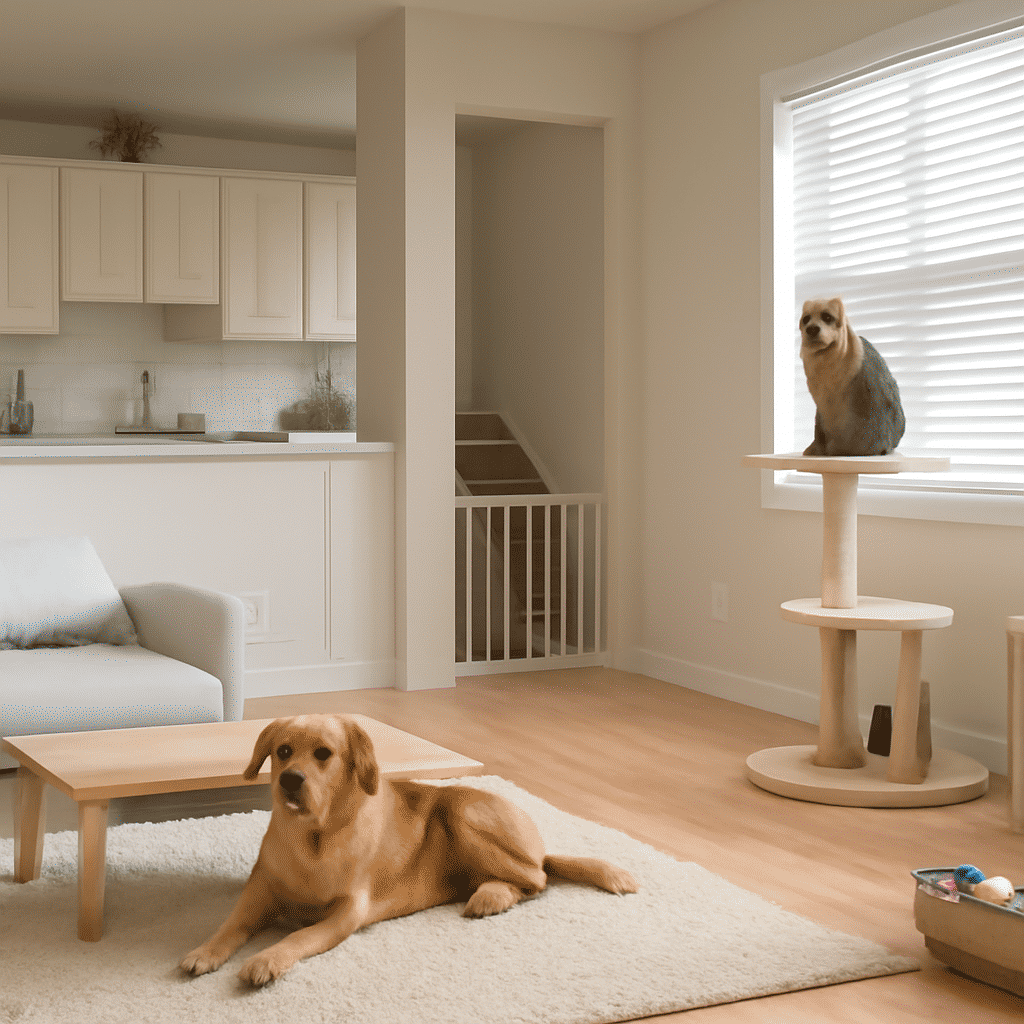
Creating a safe environment for your furry friends is crucial to their well-being. Pets are naturally curious, and everyday household items can pose unexpected risks. Here’s how you can safeguard your home to protect them from common hazards.
Identify Potential Hazards
1. Household Chemicals: Many household cleaning products, detergents, and even some plants can be harmful. Ensure these are securely stored in cabinets or high places out of reach.
2. Electrical Cords and Wires: Pets, especially puppies and kittens, love to chew on things, and electrical cords can pose a serious threat. Consider using cord protectors or organizing wires to keep them out of the way.
3. Small Objects: Buttons, batteries, or small toys can easily be swallowed, leading to choking or internal injuries. Keep floors and surfaces clear of small items that might capture a pet’s attention.
4. Human Food: Certain foods like chocolate, grapes, onions, and certain artificial sweeteners are toxic to animals. Make sure food is stored away, and educate all household members about these dangers.
5. Open Windows and Balconies: Pets can be injured from falls. Use screens or balcony netting to provide a safe outdoor experience.
Steps to a Pet-Safe Environment
1. Regular Checks: Sweep your home often to ensure harmful items, like chemicals or small objects, haven’t been left out. This includes checking under furniture where pets might explore.
2. Pet-Proof Storage: Use childproof latches on cupboards containing harmful substances. This keeps inquisitive paws out.
3. Safe Zones: Create designated pet areas where they can play safely without risk. This could be a fenced yard or a specific room with minimal hazards.
4. Training and Supervision: Teach pets basic commands to prevent them from picking up dangerous items. Supervise them during playtime to deter hazardous behavior, such as chewing on cords.
5. Emergency Preparation: Keep emergency numbers, like the vet or a pet poison hotline, handy. Knowing who to contact in an emergency can make all the difference.
6. Keep Indoor Plants Pet-Friendly: Research houseplants before bringing them into your home. Some can be toxic if ingested.
By taking these proactive steps, you create a safer living space for your pets, allowing them to explore and enjoy their environment without accidental harm. Remember, prevention is always better than reaction when it comes to pet safety.